

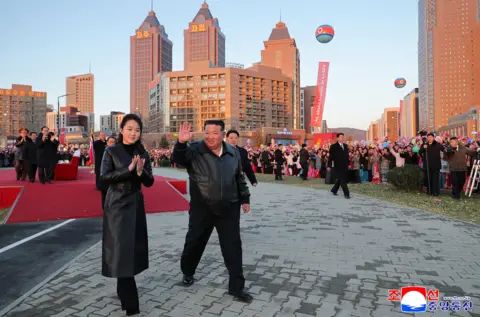
Amid threats directed at Seoul and declarations to develop the nuclear weapons program, a central uncertainty persisted at the ongoing political assembly: might the supreme leader's young child be designated as the heir?
Even though unquestionable news failed to materialise at the event, it has ignited a intense discussion about Kim Ju Ae's potential as the next leader of the 25 million country, a government only ever governed by the Kim clan.
Increased Visibility and Speculation
The girl has become progressively prominent in official broadcasts alongside her parent. However, plenty about her is still a secret. The regime has consistently refused to officially disclosed her full name or stated her age.
She was first revealed to the world in 2013. Since then, she is commonly estimated to be 13 years old, in part on analyst assessments.
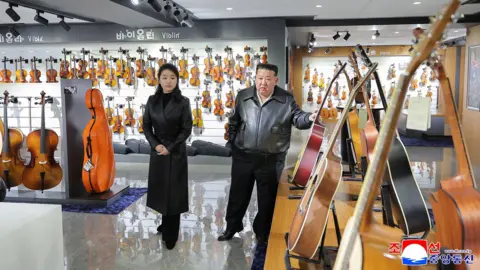
Indications of Succession
Observers point to several key clues. Her regular appearances—often positioned in the frame—and the use of honorific titles usually used for the supreme leader are seen as compelling evidence.
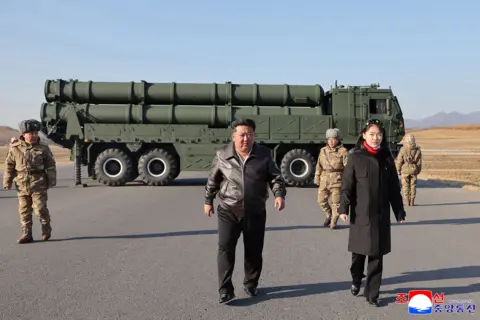
Additionally, her familiarity with the armed forces is deemed another critical factor. She has inspected soldiers and missiles with her father. Multiple times, senior generals have been seen stopping near her to speak during military displays.
"Official broadcasts is employing language exclusively used for the ruler. It highlights her own iconic image," states one respected commentator.
Such strategic familiarization is thought vital, as ultimate power in North Korea rests with command over the armed forces. To be a legitimate future leader, she must appear as a authoritative leader.
Debate Over Gender and Tradition
However, a substantial opposing view is raised. Some analysts believe that North Korea's profoundly patriarchal society presents an insurmountable barrier for a female leader.
They point out that women at every level face difficulties for fair recognition. Female leaders in senior positions are extremely rare. Common practices also demonstrate these norms.
"When it happens, they end the trip then go to the back of their car and spit three times to remove the curse," describes a one-time regime insider.
Changing Cultural Norms
Conversely, other analysts suggest that the status of females in North Korea has changed notably since the economic collapse.
Amid that period, as the official economy faltered, females frequently became the key entrepreneurs, engaging in informal commerce. This has reportedly led to a perceptible change in gender roles.
One expert who has spoken to many escapees suggests that it is now less uncommon to see women in administrative positions within the regime.

"We cannot analyze North Korea with outside perspective. We must imagine them as the royal court," comments the researcher. "What person would dare challenge an individual of Paektu heritage who is ascending to the supreme position?"
Succession Calculations
Recent political moves are also being analyzed. The appointment of Kim Yo Jong, the leader's powerful sibling, to a senior propaganda position is seen by some as a measure to establish a guardian for the young successor.
Finally, observers are divided. Some view the attention on Ju Ae as a deliberate tactic to improve the leader's image and normalize another family transfer of power. Others believe the signals of her training are too strong to overlook.
Either way, the debate itself may fulfill a goal for the Pyongyang, maintaining outside eyes firmly trained on the enigmatic Kim family rule.


